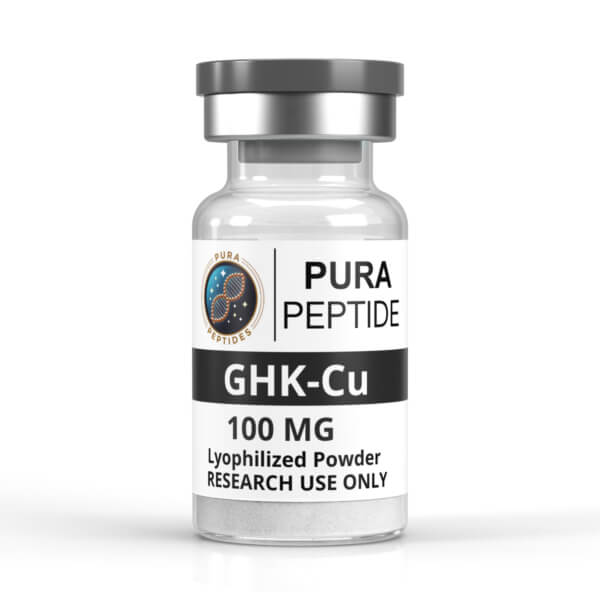
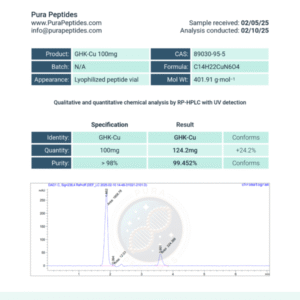
GHK-Cu 100mg
Original price was: $90.00.$65.00Current price is: $65.00.
GHK-Cu 100mg represents one of the most extensively studied copper peptides in biotechnology and cellular research. Its naturally occurring structure, broad scientific relevance, and involvement in numerous biological processes have made it a key subject of investigation for researchers worldwide.
GHK-Cu 100mg: A Complete Guide to the Copper Peptide and Its Research Applications
Introduction
GHK-Cu 100mg has become one of the most widely discussed compounds in peptide and biotechnology research. Known as a copper-binding peptide, GHK-Cu has attracted significant scientific attention due to its unique biological properties and its role in various areas of cellular and tissue research.
Originally identified in human plasma, GHK-Cu is a naturally occurring peptide that forms a complex with copper ions. Researchers have spent decades studying this peptide because of its involvement in cellular communication, tissue maintenance, and biological signaling processes.
As interest in peptide science continues to grow, GHK-Cu 100mg remains a popular topic among researchers, biotechnology professionals, and individuals interested in the latest developments in regenerative and cellular research. This guide explores what GHK-Cu is, how it works, why it is important in scientific studies, and its growing role in modern peptide research.
What Is GHK-Cu?
GHK-Cu is a naturally occurring copper peptide composed of three amino acids:
- Glycine
- Histidine
- Lysine
When these amino acids bind with a copper ion, they form the compound known as GHK-Cu.
Scientists first discovered GHK-Cu in human plasma, but it has also been identified in saliva and urine. Research has shown that natural levels of this peptide tend to decrease with age, leading to increased scientific interest in its biological functions.
Because of its ability to interact with various cellular pathways, GHK-Cu has become one of the most extensively researched peptides in biotechnology.
Understanding GHK-Cu 100mg
The term GHK-Cu 100mg refers to the amount of peptide contained within a preparation or research vial.
The 100mg concentration is commonly referenced in laboratory environments where researchers require standardized quantities for scientific investigation.
The dosage designation itself does not indicate effectiveness but serves as a measurement for research purposes and experimental consistency.
How Does GHK-Cu Work?
Researchers believe GHK-Cu functions as a signaling molecule that interacts with multiple biological systems.
Scientific studies suggest that GHK-Cu may influence:
- Cellular communication
- Gene expression
- Tissue maintenance
- Protein synthesis pathways
- Biological repair mechanisms
The peptide’s interaction with copper is believed to play an important role in its biological activity.
As research continues, scientists are gaining a deeper understanding of the complex mechanisms associated with GHK-Cu.
Why Is GHK-Cu Popular in Research?
Several factors contribute to the popularity of GHK-Cu within the scientific community.
Naturally Occurring Compound
Unlike many synthetic peptides, GHK-Cu occurs naturally within the human body.
This characteristic has made it particularly interesting for researchers studying biological regulation and cellular function.
Broad Research Applications
GHK-Cu has been investigated across numerous scientific disciplines, including:
- Cellular biology
- Tissue research
- Biotechnology
- Cosmetic science
- Regenerative medicine research
Its versatility has helped establish it as one of the most studied peptides available today.
Extensive Scientific Literature
Researchers have published numerous studies examining GHK-Cu and its interactions with biological systems.
This substantial body of research continues to drive interest in the peptide and support ongoing investigations.
Research Areas Associated with GHK-Cu
Skin Research
One of the most frequently studied areas involving GHK-Cu is skin-related research.
Scientists have explored how copper peptides interact with biological pathways involved in tissue maintenance and cellular renewal.
Hair Research
Researchers have also examined GHK-Cu in studies focused on hair follicle biology and scalp-related cellular activity.
This area continues to receive attention within cosmetic and biotechnology research fields.
Tissue Maintenance Studies
GHK-Cu has been investigated for its interactions with connective tissues and cellular maintenance mechanisms.
Researchers continue evaluating how the peptide influences biological processes associated with tissue structure.
Gene Expression Research
Scientific studies suggest that GHK-Cu may influence certain gene expression pathways.
Understanding these interactions remains an active area of peptide research.
Advantages of Copper Peptide Research
Copper peptides have become increasingly important in biotechnology due to their unique properties.
High Biological Activity
GHK-Cu demonstrates strong interactions with various cellular systems, making it valuable for scientific investigation.
Multiple Research Applications
Researchers continue exploring copper peptides in diverse fields, including:
- Regenerative science
- Cosmetic research
- Cellular biology
- Biotechnology
- Tissue engineering
Scientific Innovation
The growing interest in peptide technology has created new opportunities for understanding biological processes at the molecular level.
GHK-Cu Compared to Other Research Peptides
GHK-Cu vs. BPC-157
While both peptides are subjects of scientific investigation, they are studied for different biological pathways and mechanisms.
GHK-Cu vs. Growth Hormone Peptides
Growth hormone peptides primarily focus on endocrine signaling pathways.
GHK-Cu is generally researched for its interactions with cellular communication and tissue-related biological processes.
GHK-Cu vs. Other Copper Peptides
GHK-Cu remains one of the most recognized copper-binding peptides due to its extensive research history and broad scientific interest.
Safety and Research Considerations
Researchers evaluating GHK-Cu typically focus on several important factors.
Purity
High-quality peptide materials help ensure accurate and reliable scientific investigations.
Stability
Peptide stability can significantly influence research outcomes and experimental consistency.
Laboratory Handling
Proper storage and handling procedures are essential components of peptide research.
Regulatory Compliance
Research compounds may be subject to specific regulations depending on jurisdiction and intended use.
Researchers should always follow applicable guidelines and standards.
Frequently Asked Questions About GHK-Cu 100mg
What Is GHK-Cu?
GHK-Cu is a naturally occurring copper peptide composed of glycine, histidine, lysine, and a copper ion.
What Does 100mg Mean?
The 100mg designation refers to the amount of peptide contained within a preparation or research vial.
Why Is GHK-Cu Important in Research?
Researchers are interested in GHK-Cu because of its interactions with cellular communication, tissue biology, and gene expression pathways.
Is GHK-Cu Naturally Found in the Body?
Yes. GHK-Cu occurs naturally in human plasma, saliva, and urine.
The Future of GHK-Cu Research
Peptide science continues to advance rapidly, and GHK-Cu remains a significant focus of scientific investigation.
Future research may provide additional insights into:
- Cellular signaling pathways
- Tissue biology
- Gene regulation
- Biotechnology innovations
- Regenerative science applications
As scientific understanding expands, GHK-Cu is expected to remain one of the most important peptides within modern research communities.
Conclusion
GHK-Cu 100mg represents one of the most extensively studied copper peptides in biotechnology and cellular research. Its naturally occurring structure, broad scientific relevance, and involvement in numerous biological processes have made it a key subject of investigation for researchers worldwide.
As peptide science continues to evolve, GHK-Cu remains at the forefront of research involving cellular communication, tissue biology, and molecular signaling. With ongoing studies exploring its potential and mechanisms, this copper peptide is likely to remain an important focus within biotechnology and regenerative research for years to come.
Be the first to review “GHK-Cu 100mg”
Related products
Reviews
There are no reviews yet.