
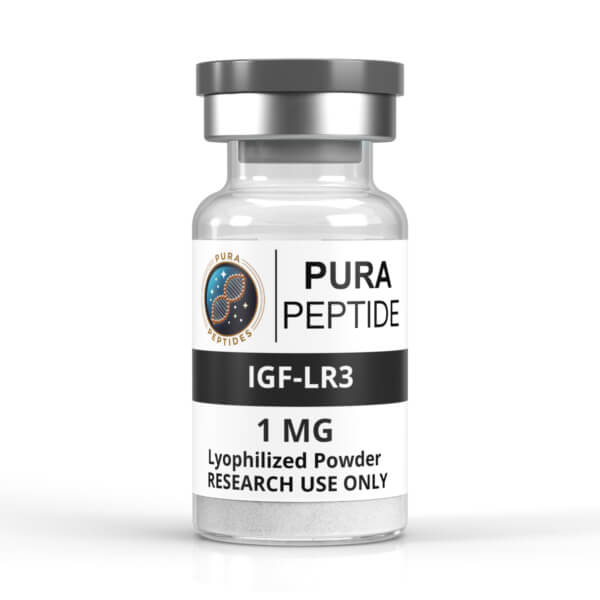
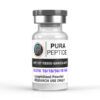
IGF-LR3 (1MG)
Original price was: $125.00.$99.00Current price is: $99.00.
IGF-LR3 (1MG) is a significant research peptide that has gained attention due to its extended activity, unique structure, and role in cellular signaling studies. By providing researchers with valuable insights into growth factor pathways and biological regulation, IGF-LR3 continues to contribute to advancements in biotechnology and molecular science.
IGF-LR3 (1MG): A Comprehensive Guide to This Long-Acting Research Peptide
Introduction
IGF-LR3 (1MG) is one of the most widely discussed compounds in peptide and biotechnology research. As a modified form of insulin-like growth factor-1 (IGF-1), IGF-LR3 has attracted significant scientific interest due to its unique structure, extended activity, and interactions with cellular signaling pathways.
Researchers have spent years studying IGF-LR3 to better understand its role in cell growth, metabolism, tissue development, and biological communication. Its long-acting nature makes it particularly valuable in laboratory investigations where scientists seek to examine the effects of insulin-like growth factor signaling over extended periods.
This guide explores the science behind IGF-LR3 (1MG), including its structure, mechanism of action, research applications, and growing importance within peptide research.
What Is IGF-LR3?
IGF-LR3 stands for Insulin-Like Growth Factor Long Arginine 3. It is a modified version of naturally occurring IGF-1, a hormone-like protein involved in cellular growth and development.
Scientists created IGF-LR3 by altering the original IGF-1 structure to increase its stability and extend its activity within biological systems. Compared to standard IGF-1, IGF-LR3 contains additional amino acids and structural modifications that allow it to remain active for a longer period.
These characteristics have made IGF-LR3 a popular subject of investigation in cellular biology and metabolic research.
Understanding IGF-LR3 (1MG)
The term IGF-LR3 (1MG) refers to a preparation containing one milligram of the peptide.
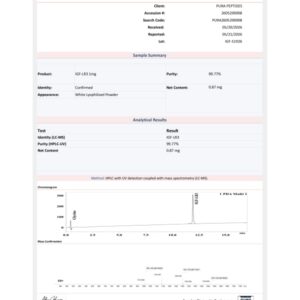
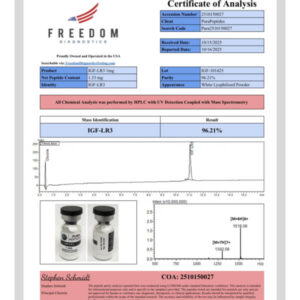
Researchers often use standardized concentrations to support consistency in laboratory studies and experimental protocols. The 1MG designation simply indicates the quantity of peptide available for research purposes and does not imply effectiveness or outcomes.
Standardized measurements help ensure reproducibility and accuracy across scientific investigations.
How Does IGF-LR3 Work?
IGF-LR3 interacts with insulin-like growth factor receptors found throughout the body.
Researchers believe the peptide influences several biological processes, including:
- Cellular signaling
- Protein synthesis pathways
- Tissue development
- Metabolic regulation
- Cell growth mechanisms
One notable characteristic of IGF-LR3 is its reduced binding to certain IGF-binding proteins. This modification allows the peptide to remain available within biological systems for a longer duration compared to naturally occurring IGF-1.
Because of these properties, IGF-LR3 continues to be extensively studied in laboratory environments.
Why Is IGF-LR3 Popular in Research?
Extended Biological Activity
One of the primary reasons researchers study IGF-LR3 is its longer duration of activity.
The peptide’s structural modifications help distinguish it from standard IGF-1 and contribute to its unique research value.
Cellular Growth Research
Scientists have long been interested in understanding the mechanisms that regulate cell growth and development.
IGF-LR3 provides researchers with a useful tool for examining signaling pathways associated with these biological processes.
Metabolic Studies
Researchers continue investigating how insulin-like growth factors influence metabolism and energy utilization.
IGF-LR3 plays an important role in expanding knowledge within this field.
Extensive Scientific Interest
Due to its biological significance, IGF-LR3 has been referenced in numerous scientific studies examining cellular function and molecular signaling.
Research Applications of IGF-LR3
Cellular Biology Research
One of the most important applications of IGF-LR3 involves studying cellular communication pathways.
Researchers investigate how cells respond to growth factor signaling and how these interactions influence biological function.
Tissue Development Studies
IGF-LR3 is frequently examined in research focused on tissue development and cellular maintenance.
Understanding these processes contributes to broader scientific knowledge regarding growth and regeneration mechanisms.
Metabolic Research
Metabolism remains a major area of investigation within biomedical science.
Researchers explore how signaling molecules such as IGF-LR3 interact with pathways involved in nutrient utilization and energy regulation.
Biotechnology Research
Peptides like IGF-LR3 continue to play an important role in biotechnology and molecular biology.
Their targeted biological activity makes them valuable tools for scientific exploration.
Advantages of IGF-LR3 Research
Enhanced Stability
Compared to naturally occurring IGF-1, IGF-LR3 was specifically engineered for greater stability.
This feature supports longer experimental observation periods.
Broad Research Relevance
Researchers study IGF-LR3 across multiple scientific disciplines, including:
- Cellular biology
- Endocrinology
- Biotechnology
- Molecular biology
- Metabolic science
Valuable Research Tool
The peptide’s unique properties make it useful for investigating various biological pathways and regulatory systems.
IGF-LR3 vs. Standard IGF-1
Although IGF-LR3 and IGF-1 are closely related, there are important distinctions.
IGF-1
Naturally occurring IGF-1 is produced in the body and plays a role in growth and development.
IGF-LR3
IGF-LR3 contains structural modifications that extend its activity and alter its interaction with binding proteins.
These differences contribute to its popularity in research settings.
Safety and Research Considerations
As with all research compounds, proper scientific evaluation is essential.
Researchers typically focus on:
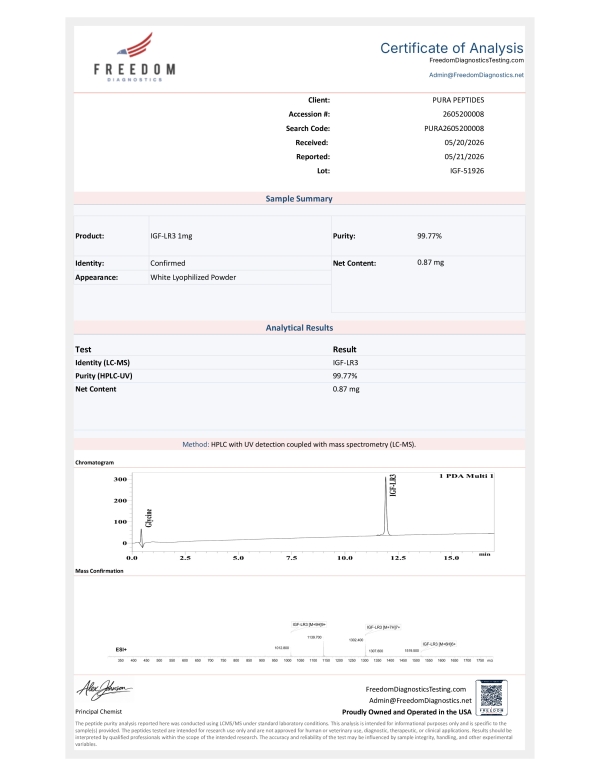
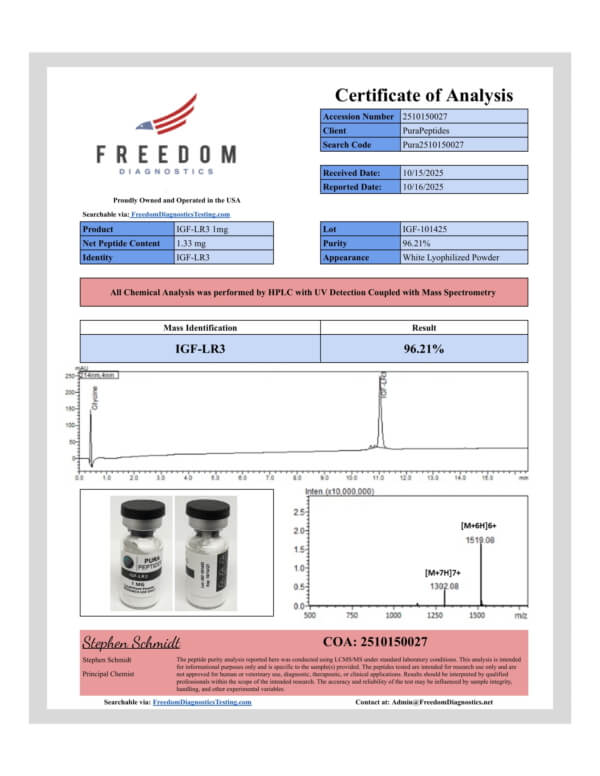
Purity Verification
High-purity materials support accurate and reliable research outcomes.
Stability Assessment
Understanding storage requirements and peptide stability helps ensure experimental consistency.
Laboratory Protocols
Following established laboratory procedures is important when conducting peptide-related investigations.
Regulatory Compliance
Research compounds may be subject to specific regulations depending on jurisdiction and intended use.
Researchers should always follow applicable legal and ethical guidelines.
Frequently Asked Questions About IGF-LR3 (1MG)
What Is IGF-LR3?
IGF-LR3 is a modified version of insulin-like growth factor-1 designed for extended biological activity in research settings.
What Does 1MG Mean?
The 1MG designation refers to the amount of peptide contained within a preparation or research vial.
Why Is IGF-LR3 Studied?
Researchers investigate IGF-LR3 because of its interactions with cellular signaling pathways, growth factor receptors, and metabolic processes.
How Is IGF-LR3 Different from IGF-1?
IGF-LR3 has been structurally modified to provide greater stability and longer-lasting biological activity.
The Future of IGF-LR3 Research
Peptide science continues to expand rapidly, creating new opportunities for understanding cellular communication and molecular regulation.
Future research involving IGF-LR3 may contribute to advances in:
- Cellular biology
- Growth factor signaling
- Tissue science
- Biotechnology
- Metabolic research
As scientific understanding evolves, IGF-LR3 is expected to remain an important subject within the broader field of peptide and molecular research.
Conclusion
IGF-LR3 (1MG) is a significant research peptide that has gained attention due to its extended activity, unique structure, and role in cellular signaling studies. By providing researchers with valuable insights into growth factor pathways and biological regulation, IGF-LR3 continues to contribute to advancements in biotechnology and molecular science.
As interest in peptide research grows, IGF-LR3 remains a key focus for scientists seeking to better understand cellular development, metabolic regulation, and the complex mechanisms that govern biological function.
Be the first to review “IGF-LR3 (1MG)”
Related products
Reviews
There are no reviews yet.