
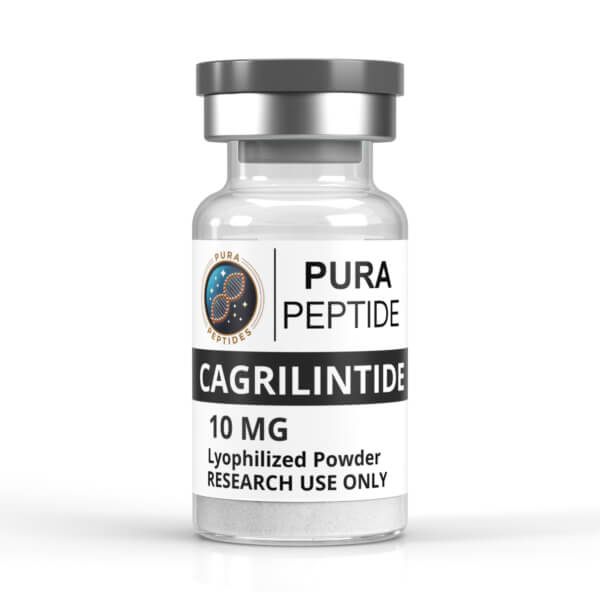
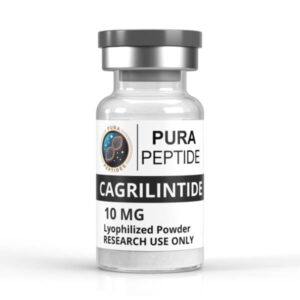
Cagrilintide 10MG
Original price was: $120.00.$99.00Current price is: $99.00.
Cagrilintide 10MG represents an important area of modern peptide research. As a long-acting amylin analog, it offers researchers valuable opportunities to investigate metabolic pathways, appetite-related signaling, and endocrine system interactions.
Cagrilintide 10MG: A Complete Guide to This Emerging Research Peptide
Cagrilintide 10MG has become an increasingly discussed topic within metabolic and peptide research. As scientific interest in appetite-regulating hormones and metabolic signaling continues to grow, researchers are exploring compounds that may help improve understanding of energy balance, food intake regulation, and endocrine function.
Cagrilintide is a long-acting amylin analog that has attracted attention in scientific studies focused on metabolic pathways and appetite-related biological mechanisms. Researchers continue investigating its interactions with various physiological systems to better understand its role within the body’s complex signaling networks.
This guide provides an in-depth overview of Cagrilintide 10MG, including its background, mechanism of action, research applications, and growing significance within peptide science.
What Is Cagrilintide?
Cagrilintide is a synthetic analog of amylin, a naturally occurring hormone that is co-secreted with insulin by pancreatic beta cells. Amylin plays a role in regulating several physiological processes related to nutrient intake and energy balance.
Scientists developed Cagrilintide to create a longer-acting version of amylin that can be studied more effectively in research settings. Its modified structure allows researchers to investigate how amylin receptor activation influences various biological pathways.
Because of its unique design, Cagrilintide has become a prominent subject in ongoing metabolic and endocrine research.
Understanding Cagrilintide 10MG
The term Cagrilintide 10MG refers to the quantity of peptide contained within a research preparation or vial.
The 10MG designation serves as a standardized measurement that helps researchers maintain consistency during laboratory investigations and experimental protocols.
It is important to understand that the concentration itself does not determine outcomes but simply identifies the amount of peptide available for research purposes.
How Does Cagrilintide Work?
Researchers believe Cagrilintide functions by activating amylin receptors throughout the body.
Amylin is naturally involved in several physiological processes, including:
- Appetite signaling
- Gastric emptying regulation
- Nutrient intake responses
- Energy balance pathways
- Endocrine communication
By studying how Cagrilintide interacts with these systems, researchers hope to gain deeper insights into the mechanisms that influence metabolism and appetite regulation.
Scientific investigations into these pathways continue to expand as peptide research evolves.
Why Is Cagrilintide Being Studied?
Several factors contribute to the growing interest in Cagrilintide within the scientific community.
Metabolic Research
Metabolic disorders remain a major area of global health research.
Scientists continue exploring compounds that interact with pathways associated with:
- Energy regulation
- Hormonal signaling
- Nutrient processing
- Metabolic balance
Cagrilintide has become one of several compounds being evaluated within this field.
Appetite Regulation Studies
Understanding appetite regulation is critical to advancing knowledge of human metabolism.
Researchers investigate how biological signaling systems influence:
- Hunger perception
- Satiety responses
- Food intake behaviors
- Energy consumption patterns
Hormonal Communication Research
Hormones play essential roles in coordinating physiological functions throughout the body.
Cagrilintide offers researchers an opportunity to study amylin-related signaling pathways and their broader biological effects.
Potential Research Applications
Endocrine System Research
The endocrine system relies on complex hormonal interactions to maintain physiological balance.
Researchers study Cagrilintide to better understand these communication networks and their influence on metabolism.
Energy Balance Investigations
Energy balance involves the relationship between energy intake and energy expenditure.
Scientists continue examining peptide compounds that may provide insights into this fundamental biological process.
Appetite Signaling Research
Appetite regulation involves multiple hormones, receptors, and neurological pathways.
Research into Cagrilintide contributes to a broader understanding of these interconnected systems.
Metabolic Pathway Studies
Metabolic pathways influence how the body processes nutrients and maintains energy homeostasis.
Investigating compounds such as Cagrilintide helps researchers explore these highly complex mechanisms.
Advantages of Peptide Research
Peptide science has become one of the fastest-growing areas of biomedical research.
High Biological Specificity
Peptides often interact with highly targeted receptors, making them valuable tools for scientific investigation.
Expanding Research Opportunities
Researchers continue studying peptides across numerous fields, including:
- Metabolism
- Endocrinology
- Cellular biology
- Biotechnology
- Pharmaceutical science
Innovation in Biomedical Science
Advancements in peptide engineering continue to create new opportunities for understanding human physiology and biological regulation.
Cagrilintide Compared to Other Research Peptides
Cagrilintide vs. GLP-1 Research Compounds
Researchers often compare amylin analogs and GLP-1 receptor agonists due to their involvement in appetite and metabolic signaling pathways.
While these compounds operate through different mechanisms, both contribute valuable insights into metabolic research.
Cagrilintide vs. Traditional Peptides
Many peptides focus on specific biological targets.
Cagrilintide’s connection to amylin signaling provides a distinct area of investigation within endocrine and metabolic science.
Combination Peptide Research
Some studies explore how multiple peptide pathways interact to influence physiological responses.
These investigations continue to expand scientific understanding of hormonal communication networks.
Safety and Research Considerations
As with any peptide under scientific investigation, researchers prioritize careful evaluation and responsible laboratory practices.
Key considerations include:
Purity Assessment
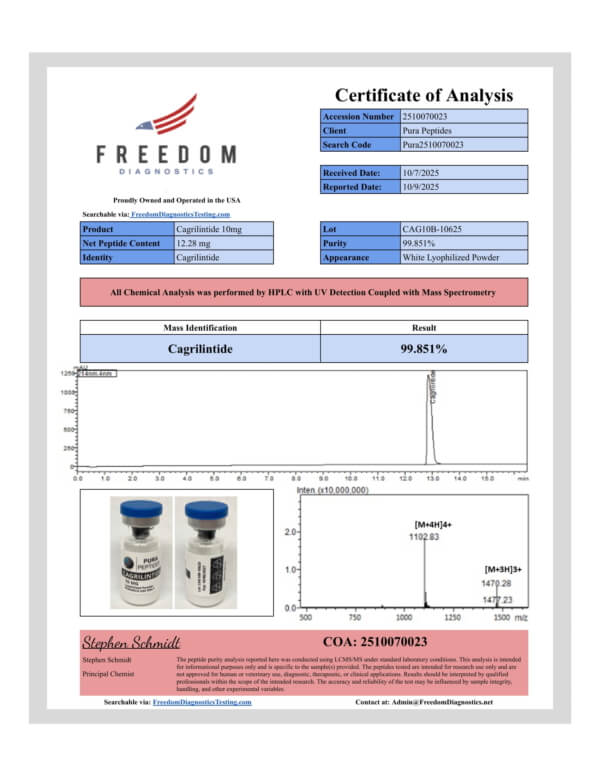
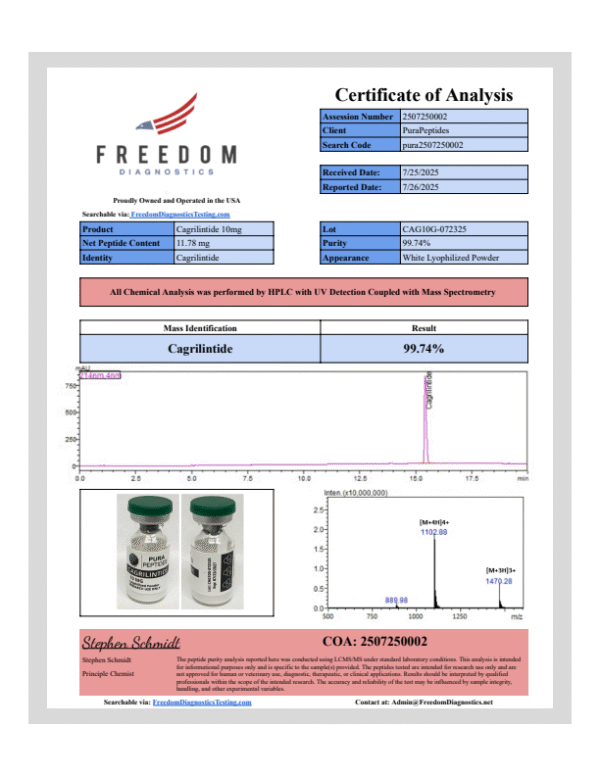
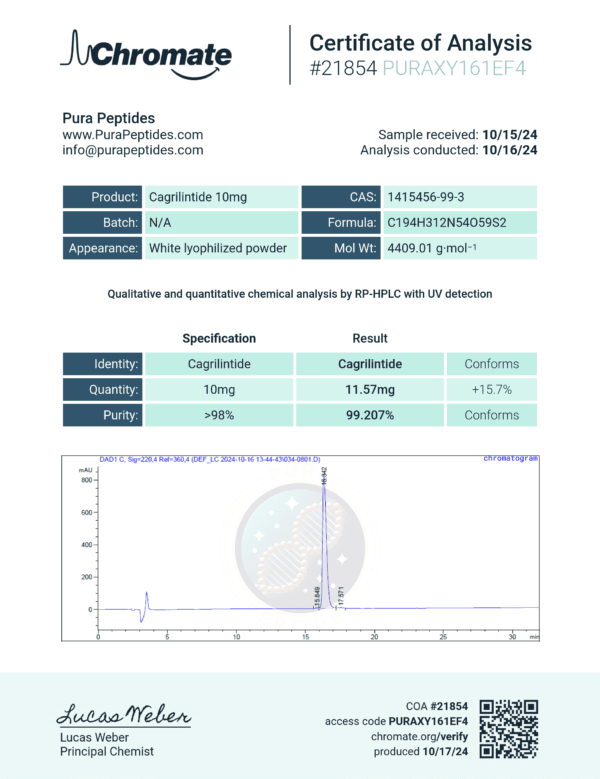
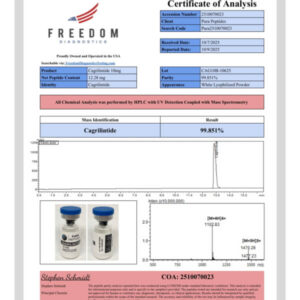
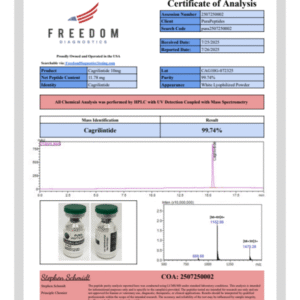
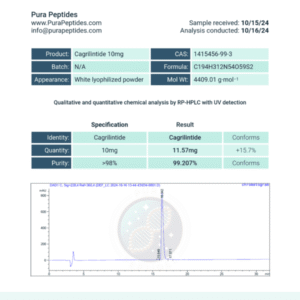
Ensuring peptide purity helps support accurate and reproducible research outcomes.
Stability Testing
Researchers examine peptide stability to better understand storage requirements and experimental consistency.
Regulatory Compliance
Peptide research may be subject to specific regulatory frameworks depending on jurisdiction and intended use.
Researchers should always follow applicable guidelines and requirements.
Evidence-Based Evaluation
Scientific conclusions should be based on peer-reviewed research, validated methodologies, and reliable data sources.
Frequently Asked Questions About Cagrilintide 10MG
What Is Cagrilintide?
Cagrilintide is a synthetic long-acting amylin analog that is being studied in metabolic and endocrine research.
What Does 10MG Mean?
The 10MG designation refers to the quantity of peptide contained within a research preparation.
Why Is Cagrilintide Important in Research?
Researchers are interested in understanding how amylin receptor activation influences appetite regulation, metabolic pathways, and hormonal communication.
Is Cagrilintide a Hormone?
Cagrilintide is not a naturally occurring hormone but rather a synthetic analog designed to mimic certain functions of amylin.
The Future of Cagrilintide Research
Interest in peptide-based science continues to grow as researchers seek new ways to understand complex physiological systems.
Future investigations involving Cagrilintide may provide additional insights into:
- Appetite regulation
- Hormonal signaling
- Metabolic function
- Endocrine communication
- Peptide-based innovations
As scientific knowledge expands, Cagrilintide is likely to remain a significant topic within metabolic and peptide research communities.
Conclusion
Cagrilintide 10MG represents an important area of modern peptide research. As a long-acting amylin analog, it offers researchers valuable opportunities to investigate metabolic pathways, appetite-related signaling, and endocrine system interactions.
With ongoing scientific studies exploring its biological properties, Cagrilintide continues to contribute to a broader understanding of human physiology and metabolic regulation. As peptide science advances, this compound is expected to remain a prominent subject within the growing field of metabolic research.
Be the first to review “Cagrilintide 10MG”
Related products
Reviews
There are no reviews yet.