

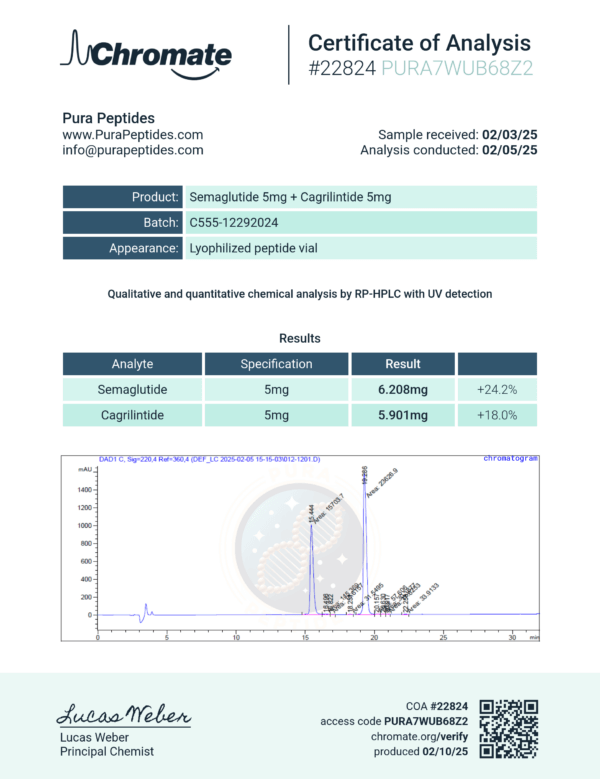

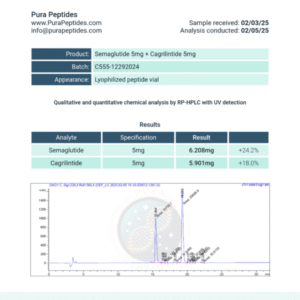
CAG-SEMA 5/5mg


$120.00
CAG-SEMA 5/5mg has emerged as an increasingly discussed peptide combination within metabolic and peptide research communities. By combining compounds that are being studied for their interactions with appetite and metabolic pathways, CAG-SEMA represents an area of ongoing scientific investigation.
CAG-SEMA 5/5mg: A Comprehensive Guide to This Emerging Research Peptide Combination
CAG-SEMA 5/5mg has become a topic of growing interest within peptide and metabolic research communities. As scientific exploration into peptide-based compounds continues to expand, researchers are increasingly investigating combinations that may offer insights into appetite regulation, metabolic pathways, and cellular signaling mechanisms.
CAG-SEMA combines two compounds that are frequently discussed in obesity and metabolic research. While ongoing studies continue to evaluate their biological properties, interest in this peptide combination has increased due to its potential relevance in scientific investigations involving energy balance and metabolic function.
This guide provides an overview of CAG-SEMA 5/5mg, including its composition, research background, potential areas of study, and why it has become a notable subject within the peptide research field.
What Is CAG-SEMA 5/5mg?
CAG-SEMA 5/5mg is a research peptide formulation that combines two compounds commonly examined in metabolic and appetite-regulation studies.
The “5/5mg” designation generally refers to the quantity of each component included within the formulation. Researchers often use standardized concentrations to support consistency across laboratory investigations and experimental protocols.
As peptide science advances, combinations such as CAG-SEMA have attracted attention because researchers are interested in understanding how multiple compounds may interact within biological systems.
Understanding Peptide Research
Peptides are short chains of amino acids that serve as signaling molecules throughout the body. They play important roles in numerous biological processes, including:
- Hormonal communication
- Cellular signaling
- Metabolic regulation
- Energy balance
- Digestive function
Because peptides can interact with highly specific biological targets, they have become an important focus within biotechnology and biomedical research.
Why Researchers Are Interested in CAG-SEMA
The increasing interest in CAG-SEMA stems from ongoing investigations into metabolic pathways and appetite-related signaling mechanisms.
Researchers are exploring how peptide-based compounds may influence:
Metabolic Processes
Metabolism involves the body’s ability to convert nutrients into usable energy.
Scientists continue studying peptide interactions with pathways involved in:
- Energy utilization
- Nutrient processing
- Cellular metabolism
- Hormonal signaling
Appetite Regulation
Appetite regulation remains one of the most actively researched areas in metabolic science.
Researchers investigate how signaling molecules influence:
- Hunger perception
- Satiety responses
- Food intake behaviors
- Energy balance mechanisms
Hormonal Communication
Peptides often act as messengers within the endocrine system.
Understanding how compounds interact with receptor pathways may provide valuable insights into broader metabolic processes.
Potential Research Applications
While scientific studies continue to evolve, researchers have expressed interest in examining CAG-SEMA within several investigative areas.
Obesity Research
One of the most common areas of peptide investigation involves understanding biological mechanisms associated with body weight regulation.
Researchers continue exploring how signaling pathways contribute to energy balance and nutrient utilization.
Metabolic Health Studies
Metabolic health remains a major area of global scientific interest.
Studies frequently examine:
- Glucose regulation
- Hormonal responses
- Energy expenditure
- Nutrient metabolism
Endocrine System Research
Peptide compounds are often evaluated for their interactions with hormonal communication networks.
Understanding these pathways helps researchers develop broader knowledge regarding biological regulation systems.
Cellular Signaling Investigations
Peptides function as important signaling molecules throughout the body.
Researchers continue studying how peptide combinations influence receptor activation and intracellular communication.
Advantages of Peptide-Based Research
Peptides have become increasingly valuable tools within scientific research due to several characteristics.
High Target Specificity
Peptides often interact with highly specific receptors and pathways, allowing researchers to investigate targeted biological mechanisms.
Broad Scientific Applications
Peptide research spans multiple disciplines, including:
- Endocrinology
- Metabolism
- Cellular biology
- Biotechnology
- Pharmaceutical science
Growing Research Interest
Advances in peptide technology continue to create opportunities for exploring new biological concepts and potential therapeutic approaches.
CAG-SEMA Compared to Other Research Peptides
Researchers frequently compare peptide formulations to understand their unique characteristics and areas of investigation.
Single-Compound Peptides
Many studies focus on individual peptides to evaluate specific biological pathways.
Combination Peptide Research
Combination formulations like CAG-SEMA are investigated to better understand how multiple signaling mechanisms may interact within biological systems.
Metabolic Research Compounds
Several peptide compounds are currently being studied for their relationships with metabolism, appetite regulation, and energy balance.
CAG-SEMA represents one area within this broader field of research.
The Importance of Scientific Research
As peptide-based investigations continue to grow, researchers emphasize the importance of evidence-based evaluation.
Scientific research helps establish:
- Biological mechanisms
- Safety profiles
- Potential applications
- Regulatory considerations
- Future research directions
Reliable scientific studies remain essential for expanding knowledge about peptide compounds and their biological interactions.
Research Considerations
When examining peptide-related information, researchers often focus on several important factors.
Product Purity
High-quality laboratory materials help ensure consistency during scientific investigations.
Stability
Peptide stability can influence experimental outcomes and research reliability.
Storage Conditions
Proper handling and storage practices are important components of peptide research protocols.
Regulatory Compliance
Research compounds may be subject to varying regulations depending on jurisdiction and intended use.
Understanding applicable requirements is an important part of responsible scientific investigation.
Frequently Asked Questions About CAG-SEMA 5/5mg
What Does CAG-SEMA 5/5mg Mean?
The term generally refers to a peptide formulation containing two compounds at standardized quantities of 5mg each.
Why Is CAG-SEMA Being Studied?
Researchers are interested in understanding how peptide combinations may interact with metabolic and appetite-related biological pathways.
Is CAG-SEMA a Medication?
The regulatory status of peptide compounds varies by jurisdiction. Researchers should consult applicable regulations and scientific literature.
What Areas of Research Involve CAG-SEMA?
Current interest primarily centers around metabolism, hormonal signaling, appetite regulation, and cellular communication studies.
The Future of CAG-SEMA Research
The field of peptide science continues to expand rapidly, creating new opportunities for understanding complex biological systems.
Future research may provide additional insights into:
- Metabolic regulation
- Endocrine signaling
- Energy balance pathways
- Cellular communication
- Peptide-based innovation
As scientific knowledge grows, researchers will continue evaluating the biological properties and research potential of compounds such as CAG-SEMA.
Conclusion
CAG-SEMA 5/5mg has emerged as an increasingly discussed peptide combination within metabolic and peptide research communities. By combining compounds that are being studied for their interactions with appetite and metabolic pathways, CAG-SEMA represents an area of ongoing scientific investigation.
While research continues to evolve, the growing interest in peptide-based technologies highlights the importance of understanding biological signaling systems and metabolic regulation. As researchers explore new discoveries in peptide science, CAG-SEMA remains a notable subject within this rapidly developing field.
Be the first to review “CAG-SEMA 5/5mg”
Related products

Reviews
There are no reviews yet.