
Cartalax 20mg: Benefits, Research, Uses, and Complete Guide
The peptide research field continues to expand, bringing increased attention to compounds such as Cartalax 20mg. Researchers interested in connective tissue biology, cartilage health, cellular aging, and peptide bioregulation have explored Cartalax as part of the broader family of short bioregulatory peptides developed through the Khavinson peptide research program.
Although Cartalax is not an approved pharmaceutical drug, it has become a topic of interest in laboratory and preclinical studies focused on cartilage function, chondrocyte activity, and tissue maintenance. In this guide, we’ll examine what Cartalax 20mg is, how it works, its potential research applications, and why it continues to attract attention within the peptide community.
What Is Cartalax 20mg?
Cartalax is a synthetic tripeptide composed of three amino acids:
Alanine – Glutamic Acid – Aspartic Acid (AED)
It was originally developed within the peptide bioregulator research programs of the St. Petersburg Institute of Bioregulation and Gerontology. Researchers classify Cartalax as a cartilage-focused bioregulatory peptide that has been studied in cell cultures, connective tissue models, and aging-related research.
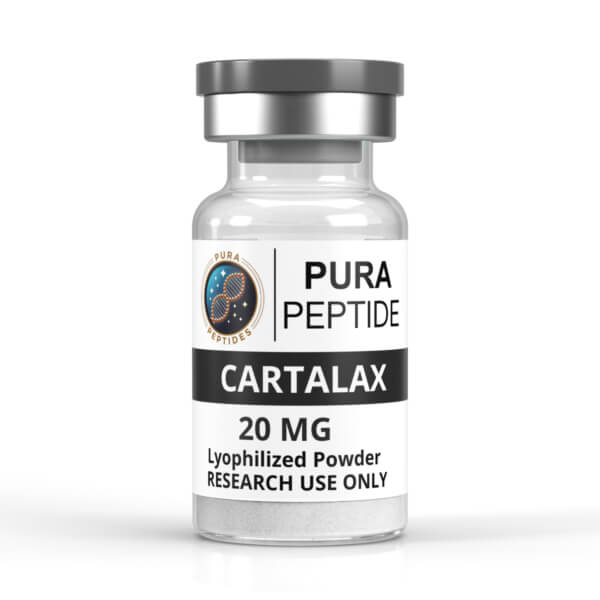
A Cartalax 20mg vial typically contains 20 milligrams of lyophilized (freeze-dried) peptide intended for laboratory research purposes. Most suppliers classify it as a research compound rather than a product approved for therapeutic use.
How Does Cartalax Work?
Researchers propose that Cartalax may function as a peptide bioregulator, meaning it could influence cellular signaling and gene expression in specific tissues.
According to published research discussions, Cartalax has been studied for its potential interactions with chondrocytes—the specialized cells responsible for maintaining cartilage tissue. Some studies suggest that Cartalax may influence extracellular matrix regulation and cartilage-related cellular pathways. However, many of these findings remain preliminary and require further independent validation.
Potential Areas of Cartalax Research
1. Cartilage Biology Research
Cartalax is most commonly associated with cartilage-related investigations.
Researchers have examined its potential role in:
- Chondrocyte activity
- Cartilage matrix maintenance
- Connective tissue biology
- Joint aging models
These studies aim to better understand how short peptides interact with cartilage tissue at the cellular level.
2. Connective Tissue Studies
Connective tissues such as cartilage, ligaments, and tendons play critical roles in mobility and structural support.
Researchers continue investigating whether Cartalax influences cellular pathways involved in tissue maintenance and extracellular matrix production.
3. Healthy Aging Research
Age-related changes in connective tissues have become an important area of peptide research.
Cartalax is often discussed within studies exploring:
- Cellular aging
- Tissue maintenance
- Structural integrity
- Longevity-related biological pathways
The peptide’s inclusion in bioregulator research programs has generated interest among scientists studying age-related cellular changes.
4. Chondrocyte Function Research
Chondrocytes are essential for producing and maintaining cartilage.
Several experimental studies have investigated how Cartalax may interact with:
- Chondrocyte signaling
- Cartilage protein synthesis
- Cellular maintenance pathways
While findings are promising, further research is needed to confirm these mechanisms.
Why Is Cartalax 20mg Popular in Peptide Research?
Several characteristics contribute to growing interest in Cartalax.
Tissue-Specific Focus
Unlike some peptides that affect multiple biological systems, Cartalax is often described as cartilage-focused within research settings.
Simple Tripeptide Structure
Cartalax consists of only three amino acids, making it one of the smaller peptide bioregulators currently under investigation.
Connection to Bioregulator Science
Cartalax belongs to a larger family of short peptides studied for their potential role in cellular regulation and healthy aging research.
Cartalax 20mg Specifications
Most research-grade Cartalax products share similar specifications:
| Property | Details |
|---|---|
| Peptide Name | Cartalax |
| Sequence | Ala-Glu-Asp (AED) |
| Type | Synthetic Tripeptide |
| Form | Lyophilized Powder |
| Typical Vial Size | 20mg |
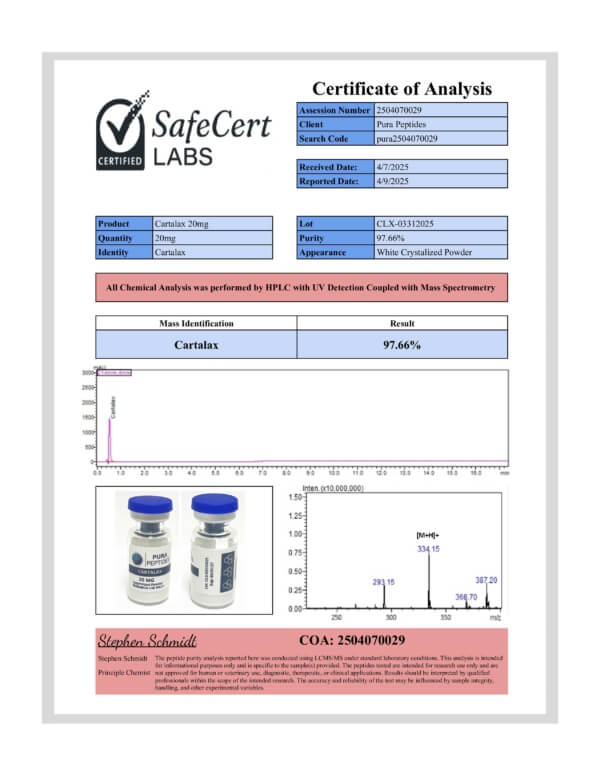
| Purity | Often ≥98–99% |
| Research Category | Cartilage & Connective Tissue Research |
These specifications may vary slightly between manufacturers.
Cartalax vs Other Bioregulator Peptides
Researchers often compare Cartalax to other peptides within the Khavinson bioregulator family.
Cartalax
Focuses primarily on:
- Cartilage biology
- Chondrocyte research
- Connective tissue studies
Other Bioregulator Peptides
Different peptide bioregulators may focus on:
- Vascular tissue
- Immune system function
- Neurological pathways
- Endocrine regulation
This tissue-specific approach is one reason Cartalax remains unique within peptide research.
Storage and Stability
Research-grade Cartalax is commonly supplied as a freeze-dried powder.
General storage recommendations include:
- Store lyophilized peptide in a cool environment
- Protect from moisture
- Avoid repeated temperature fluctuations
- Follow manufacturer guidelines
Proper storage helps preserve peptide integrity during laboratory use.
Current Research Limitations
Although Cartalax continues attracting interest, researchers acknowledge important limitations.
Limited Human Data
Most available evidence comes from:
- Cell culture studies
- Animal research
- Laboratory investigations
Human clinical evidence remains limited.
Need for Independent Validation
Several published findings have not yet been extensively replicated by independent research groups. Scientists continue evaluating the proposed mechanisms and biological effects associated with Cartalax.
Frequently Asked Questions
What is Cartalax 20mg?
Cartalax 20mg is a synthetic tripeptide bioregulator with the amino acid sequence Ala-Glu-Asp (AED), commonly used in laboratory research.
Is Cartalax approved as a medication?
No. Cartalax is generally marketed as a research compound and is not approved by major Western regulatory agencies for therapeutic use.
What is Cartalax being studied for?
Researchers are exploring Cartalax in cartilage biology, connective tissue research, chondrocyte function studies, and healthy aging investigations.
Why is Cartalax gaining popularity?
Interest in peptide bioregulators and tissue-specific cellular research has contributed to increased attention surrounding Cartalax.
Cartalax 20mg is an intriguing peptide bioregulator that continues to generate interest among researchers studying cartilage, connective tissue function, and cellular aging. Its simple AED tripeptide structure and tissue-focused research profile distinguish it from many other compounds within the peptide field.
While early studies have explored its potential role in cartilage biology and chondrocyte regulation, the current evidence remains largely preclinical. As scientific research advances, future studies may provide greater insight into the biological mechanisms and potential applications of Cartalax within regenerative and longevity-focused research.
Be the first to review “Cartalax 20mg”
Related products

Reviews
There are no reviews yet.