
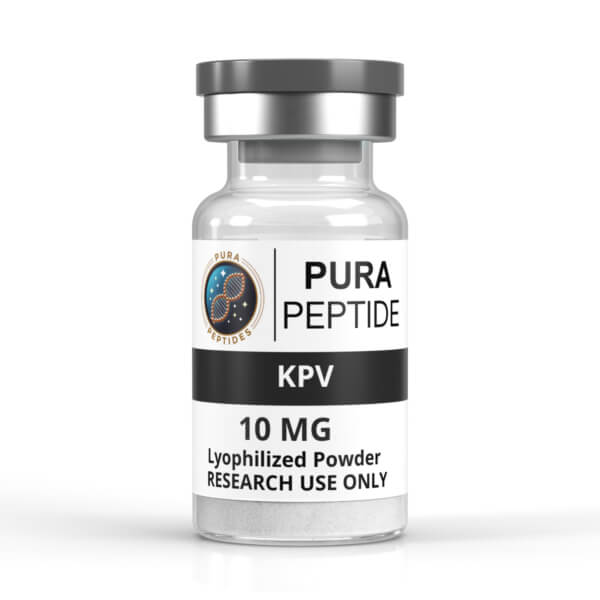
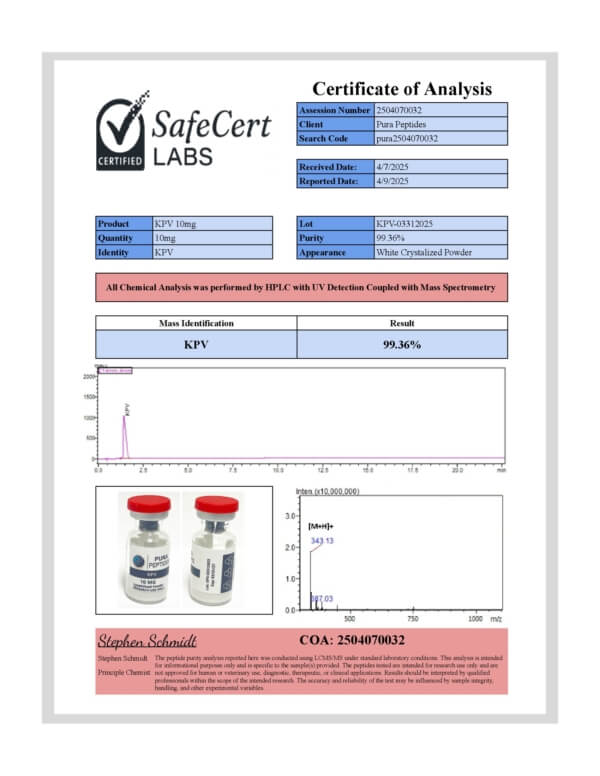
KPV 10mg
Original price was: $90.00.$55.00Current price is: $55.00.
KPV 10mg has emerged as a notable peptide within modern research due to its simple structure, biological relevance, and growing scientific interest. Derived from alpha-melanocyte-stimulating hormone, KPV continues to be investigated for its interactions with immune pathways, cellular communication networks, and gastrointestinal biology.
KPV 10mg: A Comprehensive Guide to This Emerging Research Peptide
Introduction
KPV 10mg has become an increasingly popular topic within peptide research communities across the United States, United Kingdom, and Europe. As scientific interest in bioactive peptides continues to expand, researchers are exploring compounds that may offer valuable insights into cellular communication, immune system pathways, and inflammatory processes.
KPV is a short peptide fragment derived from alpha-melanocyte-stimulating hormone (α-MSH), a naturally occurring peptide involved in numerous biological functions. Due to its unique structure and targeted biological activity, KPV has attracted attention among scientists studying immune responses, gut health, and cellular signaling mechanisms.
In this comprehensive guide, we’ll explore what KPV 10mg is, how it works, its potential research applications, and why it has become a significant subject within modern peptide science.
What Is KPV?
KPV is a tripeptide composed of three amino acids:
- Lysine (K)
- Proline (P)
- Valine (V)
The peptide is derived from alpha-melanocyte-stimulating hormone (α-MSH), which plays an important role in various physiological processes throughout the body.
Researchers became interested in KPV after discovering that this small fragment may retain specific biological properties associated with the larger α-MSH molecule. Its compact structure makes it particularly attractive for scientific investigation because it can be studied independently of the full hormone.
Today, KPV is recognized as one of the most promising peptides being investigated for its potential interactions with immune and inflammatory pathways.
Understanding KPV 10mg
The term KPV 10mg refers to a preparation containing 10 milligrams of the peptide.
In laboratory settings, standardized concentrations help researchers maintain consistency across experiments and studies. The 10mg designation simply identifies the amount of peptide present and does not indicate effectiveness, potency, or intended outcomes.
Researchers often utilize standardized quantities to support accurate measurement, reproducibility, and controlled scientific investigation.
How Does KPV Work?
Scientists believe KPV interacts with biological pathways associated with inflammation and immune system regulation.
Current research suggests that KPV may influence:
- Cellular signaling pathways
- Immune system communication
- Inflammatory response mechanisms
- Gastrointestinal biological processes
- Tissue-related cellular activity
Because KPV originates from α-MSH, researchers continue examining how this peptide fragment may retain certain biological functions while offering a more focused area of investigation.
Although studies remain ongoing, KPV has generated considerable interest due to its targeted nature and potential research versatility.
Why Is KPV Popular in Research?
Growing Interest in Peptide Science
Peptide research has expanded significantly in recent years as scientists seek more targeted approaches to understanding biological systems.
KPV represents an example of how small peptide fragments can provide valuable insights into complex physiological mechanisms.
Immune System Research
The immune system remains one of the most actively studied areas in biomedical science.
Researchers are exploring how peptides such as KPV interact with immune signaling pathways and cellular communication networks.
Gastrointestinal Research
KPV has also become a topic of interest within digestive health and gastrointestinal biology research.
Scientists continue investigating how peptide signaling may influence gut-related physiological processes.
Compact and Targeted Structure
Unlike larger proteins and hormones, KPV consists of only three amino acids, making it a highly focused molecule for scientific investigation.
Its simplicity allows researchers to study specific biological interactions in greater detail.
Potential Research Applications of KPV
Inflammation Research
One of the primary areas of scientific interest involves KPV’s relationship with inflammatory signaling pathways.
Researchers continue exploring how peptide compounds may interact with biological processes involved in inflammation regulation.
Gut Health Studies
The gastrointestinal system contains complex immune and signaling networks.
KPV has become a subject of investigation in studies focused on digestive-system biology and gut-related cellular communication.
Cellular Signaling Research
Peptides often function as signaling molecules that help coordinate physiological responses.
Scientists continue examining how KPV influences communication between cells and biological systems.
Immunology Research
Modern immunology increasingly focuses on understanding the mechanisms that regulate immune activity.
KPV’s connection to α-MSH has made it a notable peptide within this growing field of study.
Advantages of KPV Research
Small Molecular Structure
KPV’s compact structure makes it easier to study compared to larger proteins and hormones.
Targeted Biological Activity
Researchers value peptides that interact with specific pathways because they can provide clearer insights into biological mechanisms.
Expanding Scientific Literature
Interest in KPV continues to grow as new studies contribute to the expanding body of peptide research.
Broad Research Potential
Scientists are investigating KPV across multiple disciplines, including:
- Immunology
- Gastrointestinal biology
- Cellular research
- Molecular biology
- Biotechnology
KPV vs. Other Research Peptides
KPV vs. BPC-157
Both peptides are subjects of scientific investigation, but they are studied for different biological pathways and mechanisms.
KPV vs. GHK-Cu
GHK-Cu is primarily researched for cellular communication and tissue-related biological processes, while KPV is often associated with immune and inflammatory pathway studies.
KPV vs. Thymosin Peptides
Thymosin peptides are frequently examined within immune-system research. KPV offers a different approach by focusing on pathways linked to α-MSH-derived signaling mechanisms.
Research Considerations
As with all peptides under scientific investigation, researchers should consider several important factors.
Purity
High-quality peptide materials help support accurate and reliable experimental outcomes.
Stability
Understanding peptide stability is essential for maintaining consistency during laboratory investigations.
Storage Requirements
Proper storage conditions help preserve peptide integrity and support reproducible results.
Regulatory Compliance
Research compounds may be subject to specific regulations depending on the country, institution, and intended use.
Researchers in the USA, UK, and Europe should ensure compliance with applicable guidelines and legal requirements.
Frequently Asked Questions About KPV 10mg
What Does KPV Stand For?
KPV refers to the amino acid sequence Lysine-Proline-Valine, which forms the peptide’s structure.
What Is KPV Derived From?
KPV is derived from alpha-melanocyte-stimulating hormone (α-MSH), a naturally occurring peptide found in the body.
What Does 10mg Mean?
The 10mg label indicates the quantity of peptide contained within a research preparation.
Why Is KPV Being Studied?
Researchers are investigating KPV because of its interactions with immune signaling pathways, inflammation-related mechanisms, and gastrointestinal biology.
The Future of KPV Research
The future of peptide science appears highly promising, with increasing interest in targeted biological compounds.
Future studies involving KPV may contribute to advances in:
- Immune system research
- Cellular signaling science
- Gastrointestinal biology
- Molecular medicine
- Biotechnology innovation
As researchers continue exploring peptide-based technologies, KPV is expected to remain an important topic within scientific and biomedical communities worldwide.
Conclusion
KPV 10mg has emerged as a notable peptide within modern research due to its simple structure, biological relevance, and growing scientific interest. Derived from alpha-melanocyte-stimulating hormone, KPV continues to be investigated for its interactions with immune pathways, cellular communication networks, and gastrointestinal biology.
As peptide science advances across the USA, UK, and Europe, KPV remains a valuable research compound contributing to our understanding of complex biological systems. Ongoing studies will continue to expand knowledge regarding its mechanisms, applications, and potential significance within the broader field of biotechnology and molecular research.
Be the first to review “KPV 10mg”
Related products
Reviews
There are no reviews yet.