
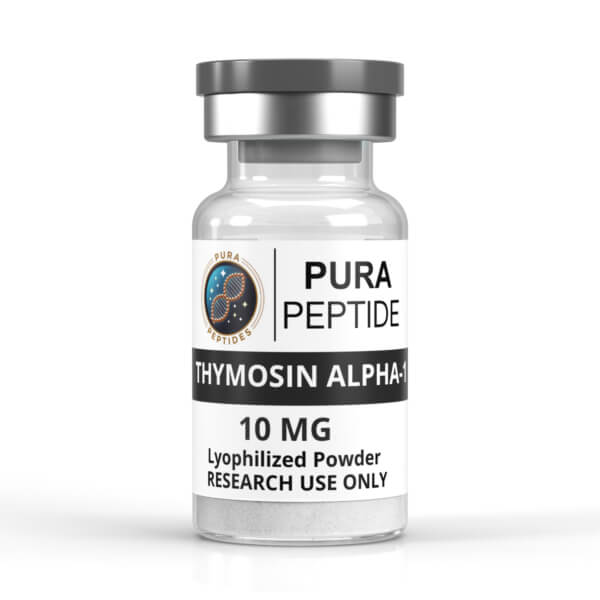
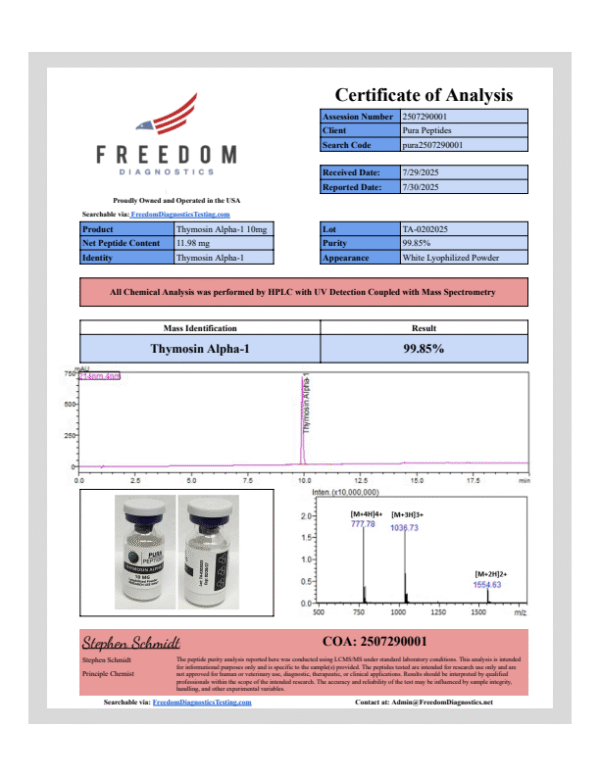
Thymosin Alpha-1
Original price was: $70.00.$55.00Current price is: $55.00.
Thymosin Alpha-1 is one of the most studied immune-regulating peptides in modern science. Its naturally occurring structure, extensive research history, and potential role in immune system communication have made it a cornerstone of peptide and immunology research.
Thymosin Alpha-1: Understanding the Science Behind This Powerful Immune-Regulating Peptide
Thymosin Alpha-1 (Tα1) is a naturally occurring peptide consisting of 28 amino acids that is derived from the thymus gland, an essential organ involved in immune system development and regulation. First isolated in the 1970s, Thymosin Alpha-1 has become one of the most extensively studied peptides in immunology due to its potential role in supporting immune function and cellular health.
Researchers have investigated Thymosin Alpha-1 for decades, exploring its interactions with various components of the immune system. Its unique ability to influence immune responses has made it a subject of interest in scientific studies related to infectious diseases, immune regulation, and overall wellness.
Today, Thymosin Alpha-1 continues to attract attention from researchers and healthcare professionals seeking innovative approaches to understanding immune system function and health optimization.
How Thymosin Alpha-1 Works
The thymus gland plays a critical role in the maturation of T-cells, which are essential for adaptive immunity. Thymosin Alpha-1 is believed to support immune communication by influencing the activity of immune cells and helping maintain balanced immune responses.
Research suggests that Thymosin Alpha-1 may interact with immune signaling pathways that regulate the body’s natural defense mechanisms. Scientists have observed its potential effects on T lymphocytes, dendritic cells, and other components involved in immune surveillance and response.
Because of these interactions, Thymosin Alpha-1 has become an important area of study within the fields of immunology and peptide science.
Potential Areas of Research
Immune System Support
One of the primary reasons Thymosin Alpha-1 has gained recognition is its association with immune function. Research has focused on how the peptide may help support communication between different immune cells and contribute to normal immune responses.
Scientists continue to explore its role in maintaining immune balance and supporting the body’s natural defense mechanisms.
Cellular Health and Regulation
Cellular communication is essential for overall health. Studies suggest that Thymosin Alpha-1 may influence signaling pathways involved in cellular regulation and immune coordination.
Understanding these mechanisms may provide valuable insights into how the immune system responds to various physiological challenges.
Healthy Aging Research
As people age, immune function naturally changes. Researchers have investigated whether peptides such as Thymosin Alpha-1 may play a role in supporting healthy immune activity throughout the aging process.
This area of study has contributed to growing interest in peptide-based approaches to wellness and longevity research.
Infectious Disease Research
Thymosin Alpha-1 has been examined in numerous scientific studies related to infectious diseases and immune responses. Researchers continue to investigate how immune-regulating peptides may contribute to broader understandings of host defense mechanisms.
Key Features of Thymosin Alpha-1
Naturally Derived Peptide
Thymosin Alpha-1 is based on a peptide naturally produced by the thymus gland, making it a significant subject of biological and medical research.
Extensive Scientific Investigation
Compared to many peptides, Thymosin Alpha-1 has been studied extensively across multiple disciplines, including immunology, cellular biology, and clinical research.
Immune-Focused Research
Its primary area of interest revolves around immune regulation, making it one of the most recognized peptides in immune system studies.
Broad Research Applications
Researchers continue to explore the peptide’s interactions with various physiological systems, contributing to a growing body of scientific literature.
Why Researchers Are Interested in Thymosin Alpha-1
Several factors contribute to the ongoing interest in Thymosin Alpha-1:
- Increasing focus on immune health
- Growing demand for innovative peptide research
- Expanding studies in healthy aging
- Advances in immunology and molecular biology
- Interest in cellular communication and regulation
These factors have helped establish Thymosin Alpha-1 as one of the most widely recognized peptides in modern biomedical research.
Benefits of Peptide Research
Peptides are naturally occurring molecules that serve as signaling agents throughout the body. Their ability to interact with specific biological pathways makes them valuable tools for scientific investigation.
Thymosin Alpha-1 is particularly notable because it demonstrates how naturally occurring peptides may influence complex immune functions. Research in this area continues to improve scientific understanding of immune regulation and cellular health.
As peptide science advances, compounds like Thymosin Alpha-1 provide important opportunities to explore new approaches to understanding human biology.
Important Considerations
While Thymosin Alpha-1 has been extensively researched, scientific understanding continues to evolve. Research findings should be interpreted within the context of ongoing investigation, and additional studies may further clarify its biological functions and applications.
Individuals seeking medical advice should always consult qualified healthcare professionals. Thymosin Alpha-1 research should not be interpreted as a substitute for professional medical diagnosis, treatment, or healthcare recommendations.
Conclusion
Thymosin Alpha-1 is one of the most studied immune-regulating peptides in modern science. Its naturally occurring structure, extensive research history, and potential role in immune system communication have made it a cornerstone of peptide and immunology research.
As scientific interest in immune health, cellular regulation, and healthy aging continues to grow, Thymosin Alpha-1 remains an important focus of investigation. While ongoing research is necessary to fully understand its mechanisms and potential applications, its significance in the field of peptide science is undeniable.
Be the first to review “Thymosin Alpha-1”
Related products
Reviews
There are no reviews yet.