
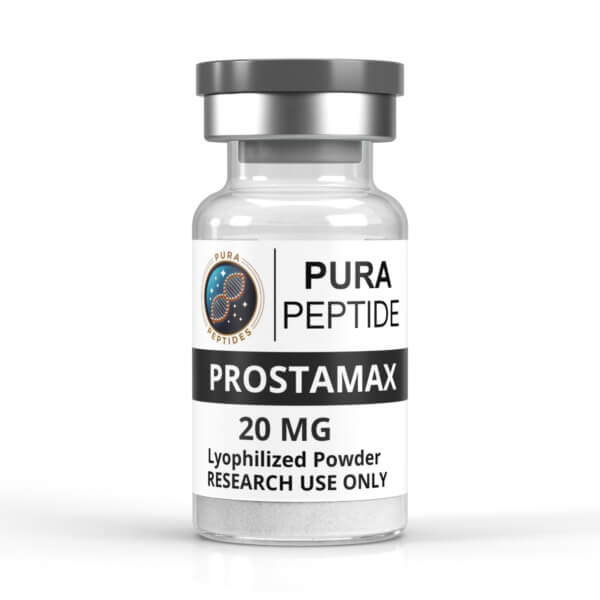
Prostamax 20mg
$65.00
Prostamax 20mg has become a topic of growing interest within the peptide research community. As a synthetic tetrapeptide bioregulator, it is being studied for its potential involvement in cellular regulation, prostate tissue research, and healthy-aging investigations.
Prostamax 20mg: Benefits, Research, Uses, and Everything You Need to Know
The growing interest in peptide science has brought increased attention to compounds such as Prostamax 20mg. Researchers and peptide enthusiasts are exploring bioregulatory peptides for their potential role in supporting cellular function, healthy aging research, and tissue-specific regulation. Among these compounds, Prostamax has emerged as a peptide of interest due to its association with prostate-related research and cellular regulation studies.
In this comprehensive guide, we’ll explore what Prostamax 20mg is, how it works, its potential research applications, and why it continues to attract attention in the peptide community.
What Is Prostamax 20mg?
Prostamax is a synthetic tetrapeptide composed of four amino acids: Lysine, Glutamic Acid, Aspartic Acid, and Proline (KEDP). It belongs to a category often referred to as peptide bioregulators and has been studied for its potential influence on gene expression, cellular communication, and tissue function.
Typically available as a lyophilized (freeze-dried) powder, Prostamax 20mg refers to a vial containing 20 milligrams of the peptide for laboratory and research purposes. Many suppliers specifically label it as a research compound and not for human consumption.
How Does Prostamax Work?
Research suggests that Prostamax may interact with cellular processes involved in gene regulation. Scientists studying peptide bioregulators propose that certain short peptides can influence chromatin structure and protein synthesis, potentially affecting how cells function and respond to aging-related changes.
Unlike hormones, peptide bioregulators are thought to work by helping regulate normal cellular activities. Current research continues to investigate how compounds like Prostamax may contribute to maintaining healthy cellular function in specific tissues.
Potential Areas of Prostamax Research
1. Prostate Tissue Research
One of the primary areas of interest surrounding Prostamax involves prostate-related studies. Researchers have examined its potential role in supporting cellular regulation within prostate tissues and exploring age-related changes in cellular function.
2. Cellular Aging Research
Peptide bioregulators have attracted attention in longevity and healthy-aging research. Scientists are investigating whether these peptides may help support normal cellular communication and gene expression patterns associated with aging.
3. Inflammatory Response Studies
Research models have explored the relationship between Prostamax and inflammatory signaling pathways. While further research is needed, this area remains one of the key topics of scientific interest.
4. Immune Function Research
Some studies have examined how peptide bioregulators may interact with immune cells and cellular repair mechanisms. Researchers continue investigating these potential interactions and their broader implications.
Why Is Prostamax 20mg Popular?
Several factors contribute to the growing interest in Prostamax:
Selective Bioregulation
Unlike compounds that broadly affect multiple systems, Prostamax is often discussed as a tissue-focused peptide in research settings. This targeted approach has generated interest among scientists studying organ-specific regulation.
Short Peptide Structure
Its relatively simple tetrapeptide structure makes it an interesting candidate for peptide research and laboratory investigations.
Growing Interest in Peptide Science
As peptide research expands, compounds like Prostamax are increasingly being studied alongside other bioregulatory peptides for their potential role in cellular health and aging-related research.
Prostamax 20mg vs Traditional Supplements
Many people compare peptide bioregulators to conventional dietary supplements.
Traditional Supplements
Traditional supplements often provide:
- Vitamins
- Minerals
- Botanical extracts
- Nutritional support
Prostamax
Prostamax differs because it is a synthetic peptide studied for its potential influence on cellular signaling and gene regulation rather than nutritional supplementation.
Storage and Stability
Most Prostamax 20mg products are supplied as a freeze-dried powder.
General storage recommendations often include:
- Keeping the product refrigerated
- Protecting it from excessive heat
- Avoiding direct sunlight
- Following manufacturer instructions
Proper storage helps maintain peptide stability and integrity.
Quality Considerations
When evaluating peptide products, quality is an important consideration.
Factors commonly reviewed include:
Purity Testing
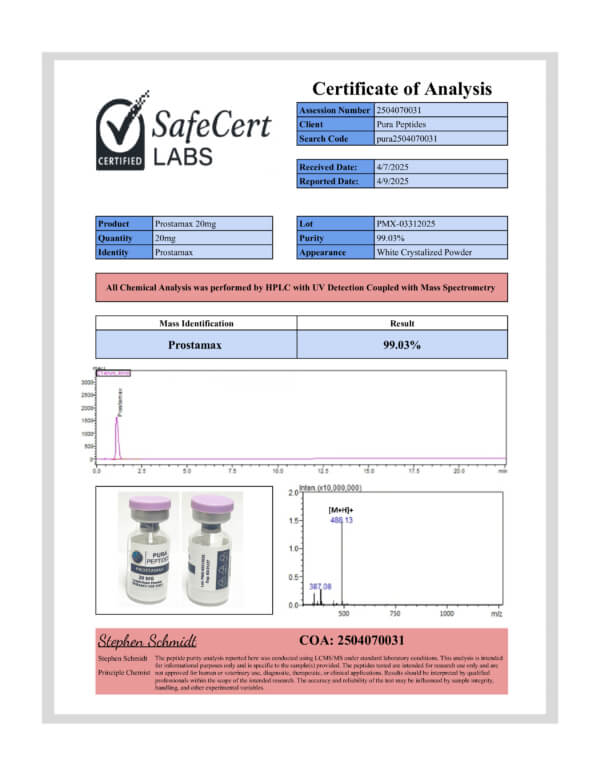
Many suppliers report purity levels exceeding 97–99% using laboratory testing methods such as HPLC analysis.
Third-Party Verification
Independent testing can provide additional transparency regarding product identity and purity.
Manufacturing Standards
Reliable peptide manufacturers often implement quality-control measures to ensure batch consistency.
Current Research Landscape
The scientific community continues exploring peptide bioregulators and their potential applications.
Areas under investigation include:
- Cellular signaling
- Tissue maintenance
- Aging-related cellular changes
- Epigenetic regulation
- Organ-specific peptide activity
While early findings have generated interest, additional research is needed to better understand the long-term implications and mechanisms involved.
Frequently Asked Questions
What is Prostamax 20mg?
Prostamax 20mg is a synthetic tetrapeptide bioregulator with the amino acid sequence Lys-Glu-Asp-Pro (KEDP), commonly used in research settings.
Is Prostamax an approved medication?
Prostamax is generally marketed as a research peptide rather than an approved pharmaceutical product. Research suppliers typically state that it is intended for laboratory use only.
Why is Prostamax being studied?
Researchers are investigating its potential role in cellular regulation, prostate-related research, and age-related biological processes.
How is Prostamax supplied?
Most suppliers offer Prostamax as a lyophilized powder in 20mg vials intended for research purposes.
Prostamax 20mg has become a topic of growing interest within the peptide research community. As a synthetic tetrapeptide bioregulator, it is being studied for its potential involvement in cellular regulation, prostate tissue research, and healthy-aging investigations.
Although promising areas of research continue to emerge, Prostamax remains primarily a research compound rather than an approved therapeutic product. As scientific understanding advances, future studies may provide greater insight into how peptide bioregulators like Prostamax interact with cellular processes and contribute to broader biological research.
Be the first to review “Prostamax 20mg”
Related products
Reviews
There are no reviews yet.