Uncategorized
Pure Bio Labs GHK-Cu 50mg Copper Peptide Vial
Sep
Pure Bio Labs GHK-Cu 50mg Copper Peptide Vial: Research Guide
Pure Bio Labs GHK-Cu 50mg Copper Peptide Vial is a research-oriented peptide product containing GHK-Cu, a copper-binding tripeptide that has attracted scientific interest for its potential role in skin biology, tissue repair, and cellular signaling. Pure Bio Labs currently describes its GHK-Cu vial as a 50mg lyophilized powder intended strictly for laboratory research and development, with the company stating that its batches exceed 99% purity and are tested using HPLC and LC-MS.
This guide explains what GHK-Cu is, what researchers are studying, what the 50mg designation means, and why laboratory documentation matters when evaluating a research peptide.
What Is GHK-Cu?
GHK-Cu stands for glycyl-L-histidyl-L-lysine copper, a naturally occurring copper-binding peptide. GHK was identified in human plasma decades ago, and research has investigated its relationship with tissue remodeling, collagen production, wound healing, and cellular signaling.
The copper component is important because GHK can bind copper ions, forming the GHK-Cu complex. Scientists have studied how this interaction may influence biological processes involving extracellular matrix proteins, fibroblasts, inflammatory signaling, and tissue repair.
Although the research history is extensive, the strength of evidence differs substantially depending on the proposed application.
Pure Bio Labs GHK-Cu 50mg Copper Peptide Vial
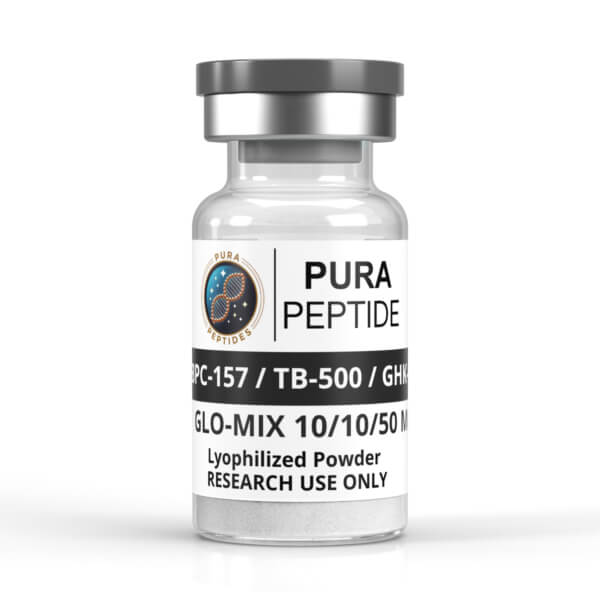
The Pure Bio Labs GHK-Cu 50mg Copper Peptide Vial is listed as a lyophilized powder in a sealed vial. According to the manufacturer’s current product information, the material is intended for laboratory research and development rather than use as a consumer medicine or dietary supplement. The company states that the product is tested using HPLC and LC-MS and reports purity above 99%.
Pure Bio Labs also provides a dedicated certificate-of-analysis section where its GHK-Cu product can be searched by batch or testing information.
For researchers, these details are important because peptide quality involves more than a percentage purity claim. Identity, composition, active mass, contaminants, microbiological quality, and analytical methodology can all affect the suitability of a material for laboratory work.
What Does 50mg Mean?
The 50mg specification refers to the stated quantity of GHK-Cu contained in the vial. It should not be interpreted as a recommended human dose.
This distinction is particularly important with research peptides. A research vial’s labeled quantity describes the amount of material supplied, while experimental protocols may involve completely different concentrations, formulations, or procedures depending on the scientific objective.
Researchers should use validated laboratory protocols and appropriate institutional procedures rather than converting the vial quantity into a personal-use regimen.
GHK-Cu and Skin Research
GHK-Cu has received considerable attention in skin research. Laboratory and animal studies have investigated processes involving collagen, glycosaminoglycans, fibroblast activity, angiogenesis, and wound repair.
Some small human studies have also investigated topical copper-peptide preparations and cosmetic skin outcomes. However, the clinical evidence remains much more limited than the preclinical literature. A recent evidence synthesis characterized the evidence for cutaneous wound healing as low certainty, noting that available studies are small and often use surrogate outcomes.
This difference between laboratory findings and established clinical outcomes is important when evaluating online claims about copper peptides.
Current GHK-Cu Clinical Research
Research into GHK-Cu remains active. For example, ClinicalTrials.gov currently lists a Phase 2 randomized, double-blind, vehicle-controlled study evaluating topical GHK-Cu gel for standardized acute skin wounds. The study is designed to investigate whether the formulation can influence re-epithelialization and scar outcomes, with an estimated enrollment of 60 participants. No results were posted on the registry at the time of the current record.
This is a useful example of how scientific evidence develops: promising laboratory observations can lead to controlled human studies, but the existence of a clinical trial does not itself prove effectiveness.
Why Laboratory Testing Matters
When researching a GHK-Cu 50mg vial, analytical documentation deserves close attention. HPLC, or high-performance liquid chromatography, can be used to characterize purity, while LC-MS can help confirm molecular identity and composition.
A certificate of analysis can provide additional information about an individual batch. Ideally, researchers should be able to connect testing documentation with the exact lot or batch being evaluated.
It is also important to distinguish chemical purity from sterility. A peptide can have a high analytical purity percentage without being appropriate for procedures requiring validated sterility or endotoxin control.
Storage and Stability
Pure Bio Labs currently recommends keeping its lyophilized GHK-Cu material cold and protected from light. Its product information states that the sealed material is stored at -20°C or below, while noting stability at ambient temperature during transit.
Researchers should follow the manufacturer’s current storage documentation and their laboratory’s handling procedures. Temperature, moisture, light, and repeated exposure can potentially affect peptide stability.
GHK-Cu Research vs. Human Use
One of the most important considerations surrounding Pure Bio Labs GHK-Cu 50mg is the distinction between research material and an approved therapeutic product.
GHK-Cu has an interesting scientific profile, but research findings should not automatically be interpreted as evidence that an unapproved vial is safe or effective for injection, wound treatment, cosmetic use, or other personal applications. A recent review similarly emphasizes the gap between extensive preclinical research and the relatively limited number of rigorous human studies.
Anyone considering a biologically active peptide for personal use should seek advice from an appropriately qualified healthcare professional.
The Pure Bio Labs GHK-Cu 50mg Copper Peptide Vial is positioned as a laboratory research product containing lyophilized GHK-Cu. Its relevance comes from the broader scientific interest in copper-binding peptides and their potential roles in skin biology, extracellular matrix remodeling, and tissue repair.
