
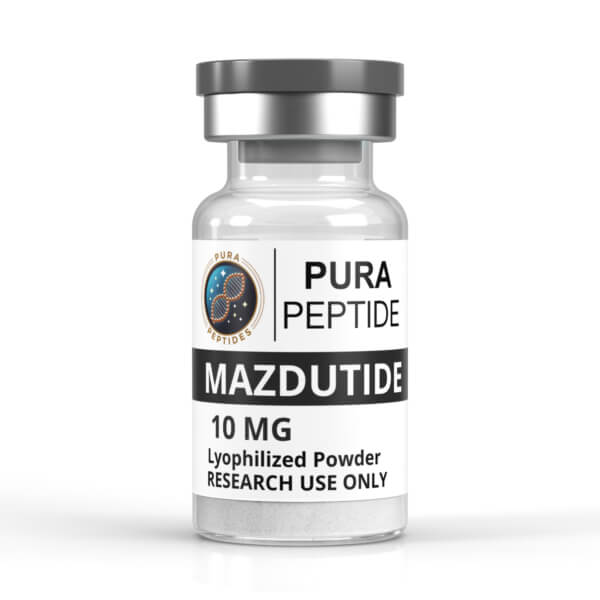
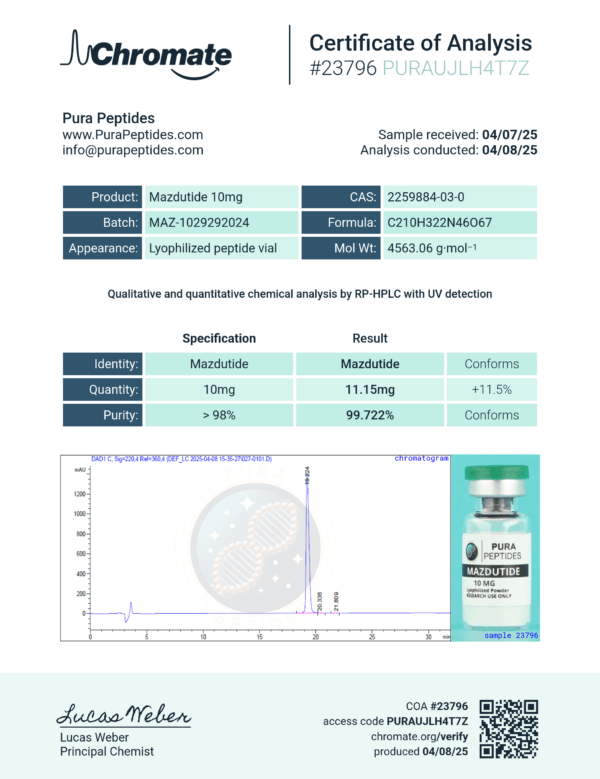
Mazdutide 10mg
$120.00
Mazdutide 10mg is an emerging dual-incretin research peptide that has attracted significant global interest due to its unique mechanism of action and potential relevance in metabolic science. By targeting both GLP-1 and glucagon receptors, it offers researchers a valuable tool for studying energy balance, glucose regulation, and endocrine signaling.
Mazdutide 10mg: A Complete Guide to This Emerging Dual-Incretin Research Peptide
Introduction
Mazdutide 10mg is gaining increasing attention in metabolic research circles across the USA, UK, and Europe due to its role as a novel dual-incretin compound being studied for its effects on glucose regulation, appetite signaling, and energy metabolism. As interest in next-generation metabolic therapies grows, Mazdutide has become a key subject in scientific discussions focused on obesity, insulin sensitivity, and endocrine system pathways.
Although still under ongoing clinical evaluation, Mazdutide represents a new class of investigational compounds designed to interact with multiple metabolic receptors simultaneously. This makes it an important topic in modern peptide and pharmaceutical research.
This article provides a complete overview of Mazdutide 10mg, including its structure, mechanism of action, research applications, and relevance in global metabolic science.
What Is Mazdutide?
Mazdutide is an investigational peptide-based compound classified as a dual GLP-1 and glucagon receptor agonist. It is being studied for its ability to influence metabolic pathways involved in:
- Glucose regulation
- Appetite control
- Energy expenditure
- Lipid metabolism
By targeting more than one receptor system, Mazdutide is considered part of a newer generation of multi-pathway metabolic agents being researched for complex conditions such as obesity and type 2 diabetes.
Understanding Mazdutide 10mg
The term Mazdutide 10mg refers to a standardized quantity of the compound used in research and formulation contexts. The 10mg designation indicates the total amount of active peptide in a preparation and is commonly referenced in laboratory, pharmaceutical, and investigational studies.
It is important to note that dosage labeling in research settings is used for measurement consistency and does not imply clinical guidance or treatment instructions.
How Does Mazdutide Work?
Mazdutide functions by interacting with two important metabolic hormone pathways:
1. GLP-1 Receptor Activation
The GLP-1 (glucagon-like peptide-1) receptor plays a central role in:
- Insulin secretion regulation
- Blood glucose control
- Appetite suppression signaling
- Gastric emptying delay
Activation of this receptor is widely studied in metabolic and diabetes research.
2. Glucagon Receptor Activation
The glucagon receptor is involved in:
- Energy mobilization
- Fat metabolism
- Hepatic glucose production
- Metabolic rate regulation
By activating both GLP-1 and glucagon receptors, Mazdutide is designed to create a balanced metabolic effect that influences both energy intake and energy expenditure.
Why Is Mazdutide 10mg Important in Research?
Dual-Pathway Mechanism
Unlike single-target compounds, Mazdutide’s dual receptor activity allows researchers to study how multiple metabolic pathways interact simultaneously.
Obesity and Metabolic Disease Research
Obesity is a major global health concern in the USA, UK, and Europe. Researchers are investigating compounds like Mazdutide to better understand:
- Appetite regulation mechanisms
- Energy balance systems
- Hormonal control of body weight
Type 2 Diabetes Studies
Mazdutide is also being explored for its role in glucose regulation, making it relevant in diabetes research models.
Next-Generation Peptide Science
Mazdutide represents a shift toward multi-target peptide therapeutics, a growing trend in endocrinology and pharmaceutical development.
Potential Research Applications of Mazdutide
Metabolic Regulation Studies
Researchers are examining how Mazdutide influences metabolic rate and nutrient processing.
Energy Balance Research
Energy balance—how the body regulates calorie intake versus expenditure—is a key area of investigation for dual-incretin compounds.
Endocrine System Research
Mazdutide interacts with hormone pathways that regulate glucose and appetite signaling, making it relevant in endocrine system studies.
Cardiometabolic Research
Scientists are also evaluating how metabolic peptides may impact broader cardiometabolic health markers in experimental models.
Mazdutide vs Other Metabolic Peptides
Mazdutide vs Semaglutide
Semaglutide is a GLP-1 receptor agonist only, while Mazdutide targets both GLP-1 and glucagon receptors, making it a dual-pathway compound in research settings.
Mazdutide vs Tirzepatide
Tirzepatide acts on GLP-1 and GIP receptors, whereas Mazdutide focuses on GLP-1 and glucagon pathways, offering a different metabolic approach.
Mazdutide vs Traditional GLP-1 Agonists
Traditional GLP-1 compounds target a single receptor pathway, while Mazdutide is part of a newer generation of multi-receptor metabolic agents.
Safety and Research Considerations
Mazdutide is currently classified as an investigational compound, meaning its properties are still being evaluated in controlled research environments.
Key research considerations include:
- Clinical trial data interpretation
- Dosage standardization in studies
- Molecular stability and formulation
- Regulatory compliance in USA, UK, and Europe
- Long-term metabolic outcome monitoring
Researchers emphasize the importance of peer-reviewed evidence and controlled study environments when evaluating compounds like Mazdutide.
Scientific Interest in Dual-Incretin Therapy
Dual-incretin therapies represent a significant advancement in metabolic research. By targeting multiple hormonal systems, scientists aim to better understand how the body regulates:
- Appetite
- Insulin response
- Energy expenditure
- Fat storage and utilization
Mazdutide is part of this expanding field, contributing to ongoing innovation in endocrinology and metabolic science.
Frequently Asked Questions About Mazdutide 10mg
What is Mazdutide 10mg?
It is a research compound dose designation referring to 10mg of Mazdutide used in scientific and laboratory studies.
What is Mazdutide used for in research?
It is studied for its effects on GLP-1 and glucagon receptors related to metabolism, glucose regulation, and appetite signaling.
Is Mazdutide approved for medical use?
Mazdutide is still under clinical investigation and is not widely approved for general medical use.
How is Mazdutide different from other peptides?
It is unique because it targets both GLP-1 and glucagon receptors, unlike single-pathway peptides.
The Future of Mazdutide Research
Mazdutide represents a promising direction in metabolic science, particularly in the development of multi-receptor peptide therapies. Ongoing research in the USA, UK, and Europe is expected to explore:
- Long-term metabolic outcomes
- Cardiometabolic risk factors
- Combination receptor effects
- Obesity and diabetes treatment models
- Next-generation peptide engineering
As scientific understanding evolves, Mazdutide may play an important role in shaping future therapeutic strategies.
Conclusion
Mazdutide 10mg is an emerging dual-incretin research peptide that has attracted significant global interest due to its unique mechanism of action and potential relevance in metabolic science. By targeting both GLP-1 and glucagon receptors, it offers researchers a valuable tool for studying energy balance, glucose regulation, and endocrine signaling.
As research continues across the USA, UK, and Europe, Mazdutide remains at the forefront of next-generation metabolic innovation and peptide-based scientific exploration.
Be the first to review “Mazdutide 10mg”
Related products



Reviews
There are no reviews yet.